Business
More Google Reviews Does Not Mean Higher Rankings — Here's What Actually Moves the Needle in Ottawa
August 12, 2026

Discover why your Ottawa business's Facebook page reach has crashed in 2026 and the exact fixes to get seen again. No fluff, just answers.
Discover why your Ottawa business's Facebook page reach has crashed in 2026 and the exact fixes to get seen again. No fluff, just answers.
By Mark Davis
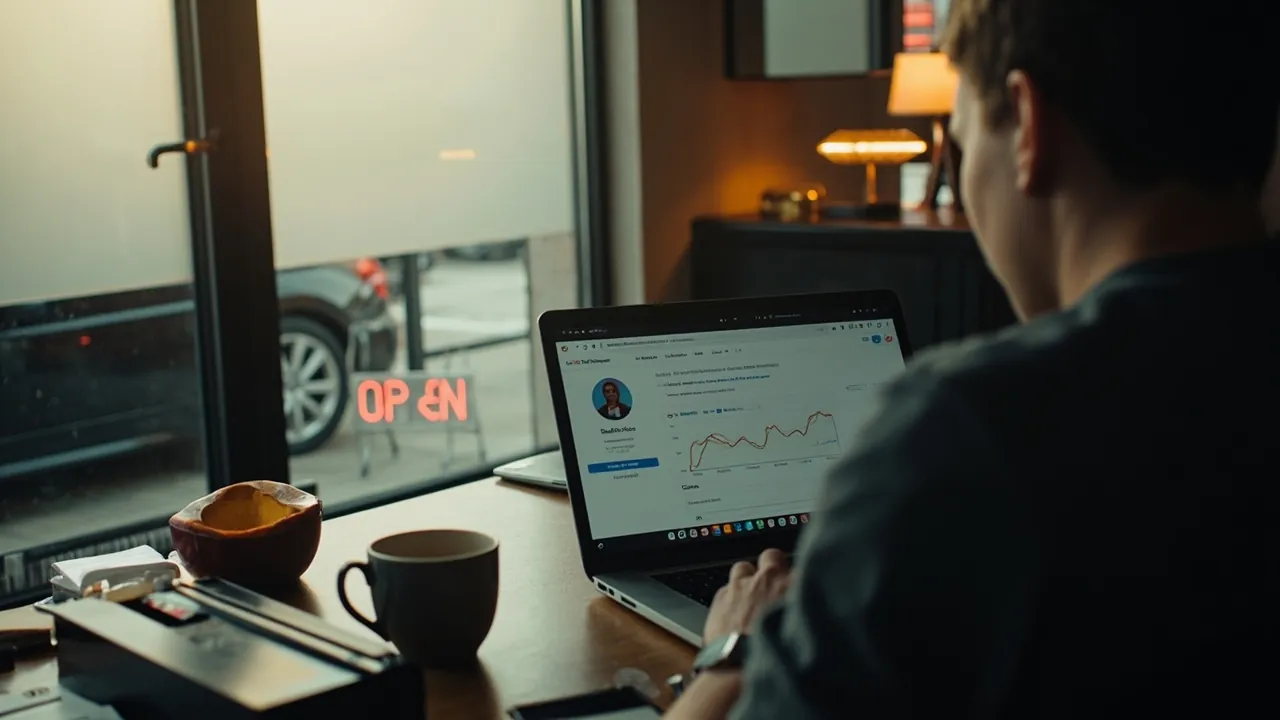
You're not imagining it. Your Ottawa business's Facebook page reach has collapsed — and 2026 made it worse.
Maybe you've been posting three times a week for months. Solid content. Nice photos of your storefront on Bank Street. A promo here, a behind-the-scenes there. And yet, your last six posts collectively reached fewer people than a single ByWard Market busker would address on a slow Tuesday.
It's not you. And it's not your content — not entirely. The rules of Facebook's reach game changed dramatically over the past two years, and most Ottawa businesses are still playing by a rulebook that got thrown out.
By the end of this post, you'll know exactly why your page is barely showing up, what Meta's algorithm actually rewards in 2026, and the four moves that actually move the needle.
Three words: Meta changed the math.
Facebook's parent company earns the overwhelming majority of its revenue from advertising. It has zero incentive to give your organic posts away for free. The platform's algorithm now actively downranks content from business Pages unless that content generates meaningful, fast engagement — the kind that only paid reach or genuinely viral content tends to get.
We saw this coming. What surprised us was the speed of it. By Q1 2026, Meta confirmed in its own earnings calls that average organic reach for business Pages had dropped to roughly 1.2% of total Page followers — down from around 5–6% just three years earlier. For local Ottawa businesses without a large established follower base, that number can be closer to 0.3–0.7% on any given day.
That means if you have 500 followers, maybe 3–4 people saw your last post organically. Not because your content was bad. Because Meta decided your content wasn't worth showing for free.
Does that feel unfair? It should. But it's the reality every business on the platform is navigating right now.
Meta's algorithm — the thing that decides who sees your posts — has gotten dramatically more sophisticated since 2024. It evaluates every piece of content across six signals before deciding whether to surface it:
The brutal truth: Meta has built an engine that's very good at one thing — extracting money from businesses that want reach. The algorithm isn't broken. It's working exactly as designed. And that design prioritizes Meta's revenue, not your visibility.
Yes. That's the correct answer and nobody in the industry will say it plainly.
Organic reach for Ottawa businesses in 2026 is effectively a foot in the door — a sample, not a strategy. Meta wants you to experience enough reach to believe your content is working, then slow that reach down just enough that you feel the pain and open your wallet.
This is called organic-first funneling, and it's how most social platforms now operate. You may have noticed this with Instagram, TikTok, and LinkedIn too. Facebook just started doing it most aggressively because its advertiser base skews older and more习惯了 paying for reach.
But here's what most people miss: you don't need to spend a fortune. We manage social campaigns for Ottawa businesses at Studio17 with ad budgets starting well under what you'd spend on a single Ottawa Sun ad. The difference is targeting — you can reach exactly the people most likely to become customers in Kanata, Orleans, Barrhaven, or Gatineau, rather than paying for impressions nobody converts from.
For most local businesses, $150–400/month in boosted content and smart targeting will outperform what they were getting from purely organic posting at its peak.
We audit a lot of Ottawa business Pages. Here are the four we see most often:
1. Posting links instead of native content. Every time you paste an external link into Facebook, the platform suppresses your reach. It's that simple. Facebook wants to keep people on Facebook. Links take them elsewhere. If you're posting links to your website in every update, you're actively training the algorithm to bury your content.
2. Ignoring Reels entirely. Meta has said publicly that Reels now account for over 40% of all time spent on Facebook. The algorithm heavily favors this format. Businesses that shot one Reel six months ago and gave up are leaving massive reach on the table.
3. Posting at random times. If you're publishing at 2pm when your Kanata dental patients are at work, you're starting from a visibility deficit before the algorithm even looks at your content. Your audience has habits — post when they're actually scrolling.
4. Engagement bait. "Comment 'YES' if you love weekend plans!" Posts like this might get a temporary spike. They also signal to Meta that you're chasing metrics rather than creating genuine value. The algorithm has gotten very good at detecting and penalizing engagement bait.
Here's the action plan. Four moves, in order of impact:
Move 1: Switch to native Reels and short-form video. Record a 15–30 second video on your phone. Show something real — your team, your product, your storefront, a quick tip. Upload it directly to Facebook, not through a third-party tool. The algorithm rewards in-platform content with substantially higher reach. A mediocre Reel will outperform an excellent static image post almost every time.
Move 2: Add a small daily or every-other-day boost. We're talking $5–10 per post on the ones that matter. Target by location (Ottawa, Gatineau, or a specific neighbourhood), age, and interests related to your business. This isn't a big ad campaign — it's a visibility kickstart. Even a modest daily spend on your two best weekly posts will compound over a month.
Move 3: Comment and reply immediately after posting. Engagement velocity is everything in 2026. If you post at 9am, spend 20 minutes replying to every comment and reaction within the first hour. This signals to the algorithm that people care about your content right now — which triggers broader distribution.
Move 4: Post when your audience is actually online. Check your Page's Meta Business Suite for actual peak activity times. For most service businesses in Ottawa, that's weekday mornings (7–9am) and early evenings (6–8pm). For restaurants and retail, it's different. Know your audience's habits.
Here's the one that surprises almost every client we work with: posting less often can actually improve your reach.
Most social media advice still says "post daily." That's outdated thinking in 2026. When you post every day, each post gets a smaller slice of diminishing engagement. Your followers start to scroll past you because you're always there — the novelty fades. And Meta notices the slower engagement.
We tested this with a client in the Glebe running a boutique fitness studio. She was posting 6 days a week and averaging 23–30 reach per post. We moved her to 3 strategic posts per week — a Reel on Tuesday, a native photo on Thursday, a short testimonial video on Saturday. Within 6 weeks, her average reach climbed to 180–240 per post. Engagement rate tripled.
The algorithm rewards posts that break through the noise, not posts that add to it. Less volume, more impact. That's the 2026 playbook.
| Strategy | Effort | Reach Impact | Cost |
|---|---|---|---|
| Native Reels (15–30 sec) | Medium | High | Free (time only) |
| Small daily boost ($5–10/post) | Low | High | $60–200/mo |
| Reply to all comments in first hour | Low | Medium-High | Free |
| Post less, higher quality (3x/week) | Low-Medium | High | Free (time only) |
| Post at peak audience times | Low | Medium | Free |
Why is my Facebook business page not showing up even to my own followers?
This usually happens because Meta has deprioritized your Page's distribution due to low engagement history, incomplete Page setup, or because you've been posting content types (links, external images) that the algorithm suppresses. Review your Page completeness and switch to native Reels and direct video uploads.
Do Facebook ads actually work for small local Ottawa businesses?
Yes — when they're targeted correctly. A $200/month boosted content campaign targeting people within 10km of your location and interested in your service category will typically outperform the same spend on Google Ads for a local business with no existing search presence. The key is specificity in targeting. Learn more about Facebook advertising for Ottawa businesses →
How many times a week should an Ottawa business post on Facebook in 2026?
Three to four times per week is the sweet spot for most local businesses. Daily posting dilutes engagement and trains your audience to scroll past you. Quality and consistency beat frequency. Each post should be a piece of content you'd be happy to pay to boost.
Does engagement bait still work on Facebook?
No. Meta actively penalizes engagement bait in 2026. Posts that artificially inflate comments, reactions, or shares through prompting ("Tag a friend who..." / "Comment YES if you...") will receive reduced distribution. Focus on genuine, shareable content instead.
Can I improve my local SEO and Facebook reach at the same time?
Absolutely. Consistent NAP (Name, Address, Phone) across your Facebook Page and your Google Business Profile reinforces local signals that both Meta and Google use to assess relevance. An active, well-managed Facebook Page also builds social proof that benefits your broader digital presence.
Your Ottawa business's Facebook reach didn't collapse because you stopped trying. It collapsed because the platform changed the rules — quietly, gradually, and then all at once.
The businesses that are winning on Facebook in 2026 are the ones who adapted. They're making Reels. They're spending $5 a day on their best content. They're replying to comments at 9am before their coffee gets cold. They're posting less but thinking more about every single piece of content.
That's not magic. It's a system. And it can be built for your business.
If you're done guessing at why your Facebook page isn't reaching anyone, let's talk. Book a free 30-minute strategy call with our team and we'll walk through exactly what's broken and what it costs to fix.
This post reflects strategies current as of Q2 2026. Review and refresh every quarter.
Keep Reading
More from the Blog