Business
New Year, New Customers: How Ottawa Businesses Win January Searches
November 19, 2026
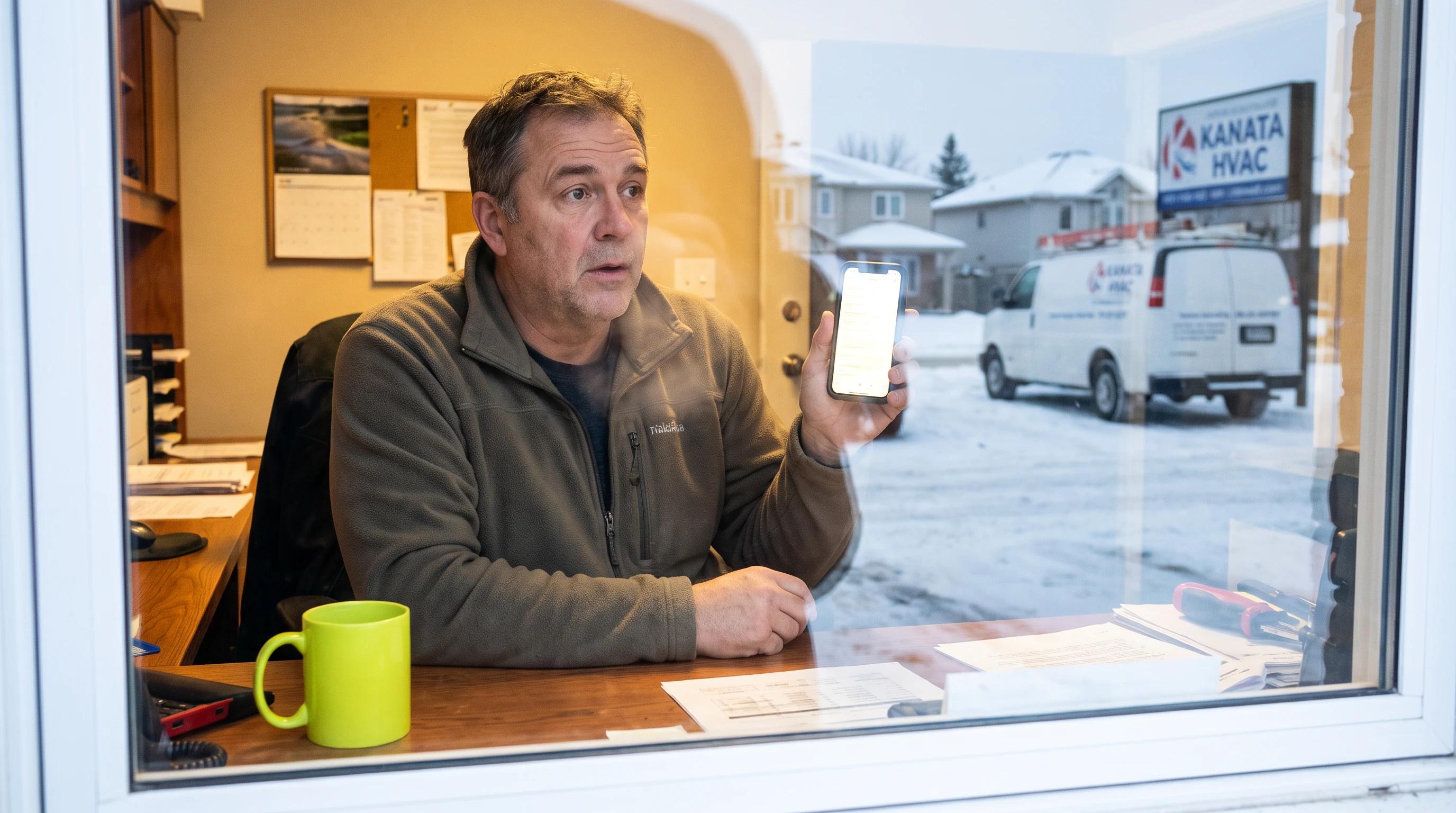
AI tools like ChatGPT and Google’s AI Overviews now recommend local businesses by name. Here’s how to check if yours is mentioned — and seven fixes if it isn’t.
Ask ChatGPT for "the best furnace repair company in Kanata" and you'll get a short list of names. Ask Google the same question and, more and more often, an AI-written summary appears above the usual results — before anyone scrolls to the map pack or your website.
So here's the question every Ottawa business owner should be asking right now: when an AI tool answers a question about what you do, does it mention you?
For most local service businesses, the honest answer is "sometimes" or "no." The good news is that the fixes aren't mysterious. AI tools build their answers from the same places that already shape your Google visibility — your Google Business Profile, your reviews, your website and what other sites say about you. If those signals are thin or inconsistent, the AI has nothing solid to work with, and it recommends someone else.
This guide walks through how AI search finds local businesses, a five-minute test you can run today, and the seven fixes that matter most.
When people say "AI search," they usually mean one of three things:
The important shift is this: a traditional Google search shows ten blue links and three map listings, and the customer decides. An AI answer often names just two to five businesses — and the customer never sees the rest. Being on page one used to be good enough. In an AI answer, you're either named or you're invisible.
Before you change anything, find out where you stand. Open ChatGPT, Google, Gemini and Perplexity and try three kinds of questions:
Write down what you see. Are you mentioned at all? Are your details right? Which competitors keep appearing, and what sources does the AI cite for them? That last part is the most useful — if Perplexity or Google's AI Overview links to a directory, a news article or a Reddit thread for a competitor, that's a source you should be on too.
Answers vary from day to day and person to person, so run the test a few times. You're looking for patterns, not a single result.
AI tools don't have a secret database of Ottawa businesses. They piece together answers from sources that already exist:
When these sources agree with each other, the AI is confident about who you are and what you do. When they disagree — an old address here, a different business name there, services that don't match — the AI hedges, and hedging usually means leaving you out.
Google's AI leans heavily on your Business Profile for local questions. Fill in every field: primary and secondary categories, a full services list with descriptions, service areas, hours (including holiday hours), attributes and photos. Vague profiles produce vague AI answers.
If you haven't reviewed your profile in a while, start with our guide to setting up a Google Business Profile in Ottawa, then check that your categories and services actually match what people search for.
This is the fix most Ottawa businesses miss. Plenty of AI tools and voice assistants rely on sources other than Google, and Bing's business data and Apple Maps feed several of them. If you've never claimed your Bing Places or Apple Business Connect listing, those tools may be working from incomplete or outdated information — or none at all.
Both are free and take about 20 minutes each. Bing Places can import your details directly from Google Business Profile.
"Great service, 5 stars" tells an AI almost nothing. "They replaced our furnace in Stittsville the same week, and the tech explained every option" tells it what you do, where you do it and why people like you. AI tools summarize review text, so the words customers use become the words the AI uses to describe you.
You can't script reviews, but you can make it easy for customers to be specific. When you ask, mention the job: "If you have a minute, we'd love a quick review about how the basement waterproofing went." Our guide on getting more Google reviews without asking awkwardly covers the rest.
Your business name, address and phone number should be identical everywhere: your website, Google, Bing, Apple, Facebook, Yelp, industry directories and the Ottawa Chamber listing if you have one. Every mismatch is a reason for an AI tool to doubt which version is right.
Our guide to building citations for your Ottawa business walks through exactly where to check and how to clean things up.
AI tools are answering questions, so give them answers to use. Add a clear page for each core service and each main area you serve. Then add a short FAQ to each page using the questions customers actually ask you on the phone: "How much does it cost?", "How long does it take?", "Do you serve Orleans?"
Write plainly. A sentence like "We install and repair furnaces and heat pumps across Kanata, Stittsville and Barrhaven, usually within 48 hours" is far easier for an AI to quote than a paragraph of marketing language.
Some websites accidentally block the crawlers that AI search tools use. This can happen through a security or firewall setting, a hosting default or an over-cautious robots.txt file. If your site blocks those crawlers, the AI can't read your pages, no matter how good they are.
Ask whoever manages your website to confirm that search crawlers — including OpenAI's OAI-SearchBot, PerplexityBot and Bingbot — aren't blocked. While they're in there, ask them to add LocalBusiness structured data (schema markup), which spells out your name, address, hours and services in a format machines read easily. Our 10-minute website audit is a good place to spot other technical problems at the same time.
AI answers often cite third-party sources: local news, neighbourhood guides, "best of Ottawa" lists, industry associations and community forums. A mention in the Ottawa Business Journal, a local podcast, a BIA directory or a supplier's "trusted installers" page all help confirm that you're a real, reputable local business.
Video counts too. Google's AI results regularly surface YouTube videos, and a short, captioned video that answers a common customer question — "What does a furnace tune-up include?" — gives AI tools one more trustworthy source that mentions you by name.
Is AI search replacing Google for local businesses?
Not replacing — changing. Most people still use Google, but Google itself now answers many questions with AI before showing regular results. Meanwhile, a growing share of people ask ChatGPT or a voice assistant first. You need to show up in both, and luckily the same work helps with both.
How long does it take to start appearing in AI answers?
Profile and listing fixes can be picked up within a few weeks. Reviews and third-party mentions build up over months. Re-run the five-minute test monthly to track progress, and keep in mind that answers vary between people and sessions.
Can I pay to be listed in ChatGPT or Google's AI Overviews?
Not directly in the AI-written answer itself. Some platforms are experimenting with ads near or inside AI results, but the recommendations an AI makes are based on the information it can find about you — which is why your listings, reviews and website matter so much.
Do I need a separate "AI SEO" strategy?
For most Ottawa small businesses, no. A complete Google Business Profile, consistent listings, detailed reviews, a clear website and a few good local mentions cover the vast majority of it. Start there before paying for anything labelled "AI optimization."
What if the AI gives wrong information about my business?
Fix the source. Wrong hours or an old address almost always come from an outdated listing somewhere. Update your Google, Bing and Apple listings and any directories showing the old details, and the AI answers usually follow.
AI tools aren't picking favourites. They recommend the businesses they can understand and trust from the information available. If your competitor has a complete profile, consistent listings and detailed reviews and you don't, the AI will name them — every time someone asks.
Run the five-minute test this week. If you're not showing up, or the details are wrong, work through the seven fixes above, starting with your listings.
Want a second set of eyes? Book a free call with Studio17 and we'll check how your business appears across Google, ChatGPT and other AI tools, and tell you what to fix first. You can also see how we handle local visibility for Ottawa businesses.
This post reflects how AI search tools work as of November 2026. These tools change quickly, so we'll review and update this guide regularly.
Keep Reading
More from the Blog